Transportation Machining Vietnam has evolved into a high-precision industrial hub supporting aerospace, electric vehicle, and automotive manufacturing. As global supply chains continue to diversify, Vietnam increasingly plays a strategic role in regulated and performance-critical transportation sectors. The country now combines competitive production costs with improving engineering depth and structured quality systems.
Within the broader framework of Vietnam Industry Applications, transportation-focused machining stands out due to its technical complexity and compliance requirements. Consequently, international OEMs and Tier suppliers are evaluating Vietnam not merely as a secondary sourcing option but as a long-term manufacturing partner.
Transportation Machining Vietnam in Aerospace and Mobility Sectors
Transportation industries demand strict dimensional control, traceability, and material integrity. Therefore, suppliers must demonstrate stable process capability and advanced inspection systems.
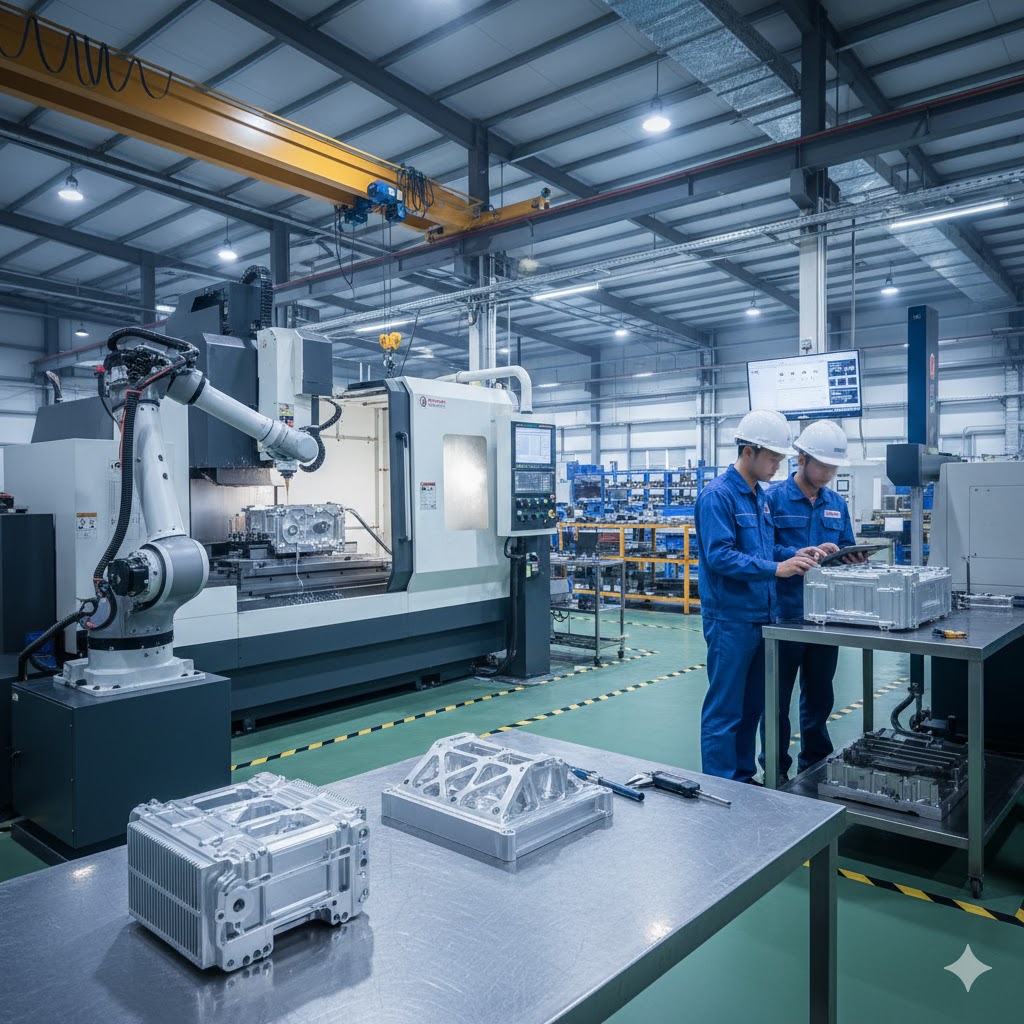
Transportation Machining Vietnam addresses these expectations through multi-axis CNC platforms, automated probing systems, and structured production workflows. In addition, leading facilities integrate coordinate measuring machines and real-time monitoring dashboards to maintain consistency across production batches.
Because aerospace and EV components require tight tolerances, machining centers frequently operate 4-axis and 5-axis configurations. These systems allow complex contouring while reducing setup errors. As a result, repeatability improves and cycle times decrease.
Moreover, export-oriented factories adopt internationally recognized certifications, strengthening credibility in regulated supply chains.
Aerospace Capability and Compliance Standards
Aerospace production represents one of the most demanding segments within transportation manufacturing. Although Vietnam is still developing its aerospace ecosystem, subcontracting capabilities continue to expand.
Aerospace Machining
The development of Aerospace Machining in Vietnam focuses on structural aluminum parts, titanium fittings, and high-precision housings. Rather than relying solely on conventional milling, many facilities now implement high-speed machining strategies to improve surface finish and dimensional stability.
In parallel, aerospace programs require strict documentation control. Therefore, suppliers implement material traceability systems, first article inspections, and statistical process control methodologies. These procedures enhance reliability and reduce quality deviation risks.
While Vietnam does not yet host full aircraft assembly lines, it increasingly serves as a secondary production base for international aerospace contractors seeking cost-efficient machining capacity.
EV Manufacturing and Electrification Growth
Global electrification trends are reshaping transportation manufacturing. Consequently, EV-related projects are expanding rapidly within Transportation Machining Vietnam.
EV Component Machining
The rise of EV Component Machining reflects Vietnam’s growing role in electric mobility supply chains. Aluminum battery enclosures, cooling plates, and motor housings require lightweight design and thermal efficiency. Therefore, precision CNC milling combined with advanced aluminum processing techniques plays a central role.
Additionally, machining centers handling EV components frequently incorporate automated inspection to ensure dimensional accuracy. Since battery housings must maintain structural integrity and heat dissipation performance, even minor deviations can compromise safety standards.
Furthermore, EV production often requires coordination between machining, anodizing, and final assembly. Integrated suppliers reduce lead time variability and improve supply chain reliability.
As EV adoption accelerates globally, Vietnam strengthens its position as a cost-effective yet technically capable partner in electrified transportation systems.
Automotive Tier 2 Supply Chain Integration
Automotive manufacturing demands scalable output and consistent repeatability. Unlike aerospace projects, which are often low-to-medium volume, automotive programs require stable mid-to-high volume production.
Automotive CNC Vietnam
The development of Automotive CNC Vietnam demonstrates the country’s integration into Tier 2 automotive supply networks. Suppliers produce drivetrain housings, transmission components, brackets, and structural supports using high-precision machining systems.
In order to meet OEM requirements, automotive-focused factories typically maintain IATF 16949 certification. Lean manufacturing principles are implemented to reduce waste and maintain cycle consistency.
Moreover, automated loading systems and in-line inspection stations enhance throughput while maintaining dimensional accuracy. As a result, suppliers can scale production efficiently without compromising quality.
Because automotive OEMs are diversifying sourcing to reduce geopolitical exposure, Vietnam’s stable manufacturing environment becomes increasingly attractive.
EV Component CNC Technology Integration
EV component CNC capability continues to advance as production complexity increases. High-speed spindles, optimized tool paths, and automated tool monitoring systems improve machining efficiency.
At the same time, digital dashboards track production performance in real time. This transparency enhances accountability and supports continuous improvement initiatives.
Since EV parts frequently involve aluminum alloys, machining parameters must balance material removal rates with surface finish requirements. Therefore, process optimization plays a critical role in maintaining cost competitiveness.
Through ongoing investment in CNC infrastructure, Vietnam strengthens its position in electric mobility supply chains.
Automotive Machining Scalability
Automotive machining operations in Vietnam combine labor efficiency with automation. Production cells are designed to handle repeatable output while maintaining tolerance stability.
Furthermore, industrial parks located near major ports improve export logistics. Reduced transportation time lowers total landed cost and enhances supply chain predictability.
As production volumes grow, suppliers increasingly adopt robotic handling systems. However, automation complements rather than replaces workforce advantages, creating a balanced cost-performance model.
Engineering Workforce and Technical Depth
Vietnam’s transportation machining capabilities are supported by a growing engineering workforce. Mechanical and manufacturing graduates enter the labor market annually, strengthening technical capacity.
In addition, foreign-invested enterprises introduce international best practices. Japanese, Korean, and European operational frameworks influence quality discipline and lean management implementation.
Because engineering teams are accustomed to export-oriented communication, collaboration with international procurement departments becomes smoother and more efficient.
Over time, this combination of technical education and global exposure enhances overall manufacturing maturity.
Quality Assurance and Inspection Infrastructure
Reliable transportation machining requires structured quality systems. Therefore, export-focused suppliers implement ISO 9001 and IATF 16949 standards.
Inspection equipment commonly includes coordinate measuring machines, optical scanners, and hardness testing devices. Digital data storage further improves traceability.
Although capability varies across suppliers, top-tier facilities meet stringent compliance requirements for aerospace, EV, and automotive clients.
Consequently, buyers should conduct technical audits to confirm certification scope and process discipline before initiating large-scale programs.
Strategic Position Within Vietnam Industry Applications
Transportation Machining Vietnam operates within the broader ecosystem of Vietnam Industry Applications, which includes industrial components, aerospace machining, and smart factory technologies.
Cross-sector integration enhances flexibility. For example, facilities serving transportation clients often share infrastructure with heavy machinery production, improving capacity utilization.
As industrial clusters continue to expand in both northern and southern regions, logistics efficiency improves and supplier networks strengthen.
Commercial Evaluation for Global Buyers
When assessing Transportation Machining Vietnam, buyers should examine engineering depth, certification alignment, and scalability potential. Furthermore, financial stability and export experience remain critical factors.
Cost competitiveness remains strong compared to Western markets. However, the true advantage lies in the balance between price, technical capability, and supply chain resilience.
By integrating Vietnam into a diversified sourcing strategy, manufacturers reduce dependency on single-country supply chains while maintaining quality performance.
Outlook and Growth Potential
Looking ahead, aerospace subcontracting, EV component production, and automotive Tier 2 integration are expected to expand. At the same time, digital transformation initiatives will further enhance operational transparency.
As ESG compliance becomes more prominent, suppliers will continue investing in sustainable production systems.
In conclusion, Transportation Machining Vietnam represents a strategically positioned industrial hub capable of supporting aerospace, EV, and automotive manufacturing programs. Through continued technological investment, structured quality management, and supply chain diversification, Vietnam strengthens its role in global transportation manufacturing networks.