FAQs
What is CNC machining Vietnam?
CNC machining Vietnam refers to the production of precision parts in Vietnam using computer-controlled machining equipment. These machines follow digital programs to cut, drill, mill, turn, grind, or shape materials into accurate industrial components. The process is commonly used for metal and plastic parts that require tight tolerances, repeatable quality, and consistent dimensions.
For global buyers, CNC machining Vietnam is not only about lower production cost. It is also about building a more flexible and resilient supply chain. With the right engineering partner, buyers can source machined parts from Vietnam while maintaining control over technical drawings, material specifications, inspection standards, finishing requirements, and export delivery.
Why should global buyers choose Vietnam for CNC machining?
Global buyers choose Vietnam for CNC machining because the country offers a strong combination of competitive manufacturing cost, skilled labor, improving industrial capability, and growing export experience. Vietnam has become an attractive sourcing destination for companies that want to diversify beyond traditional manufacturing markets while still maintaining reliable production quality.
In addition, Vietnam is well positioned for international buyers that need long-term supplier stability. With proper supplier selection, engineering review, quality control, and logistics coordination, companies can use Vietnam as a dependable base for precision CNC machined parts. This is especially valuable for U.S. and EU buyers looking for cost-effective production without losing technical oversight.
What types of CNC machining services do you provide?
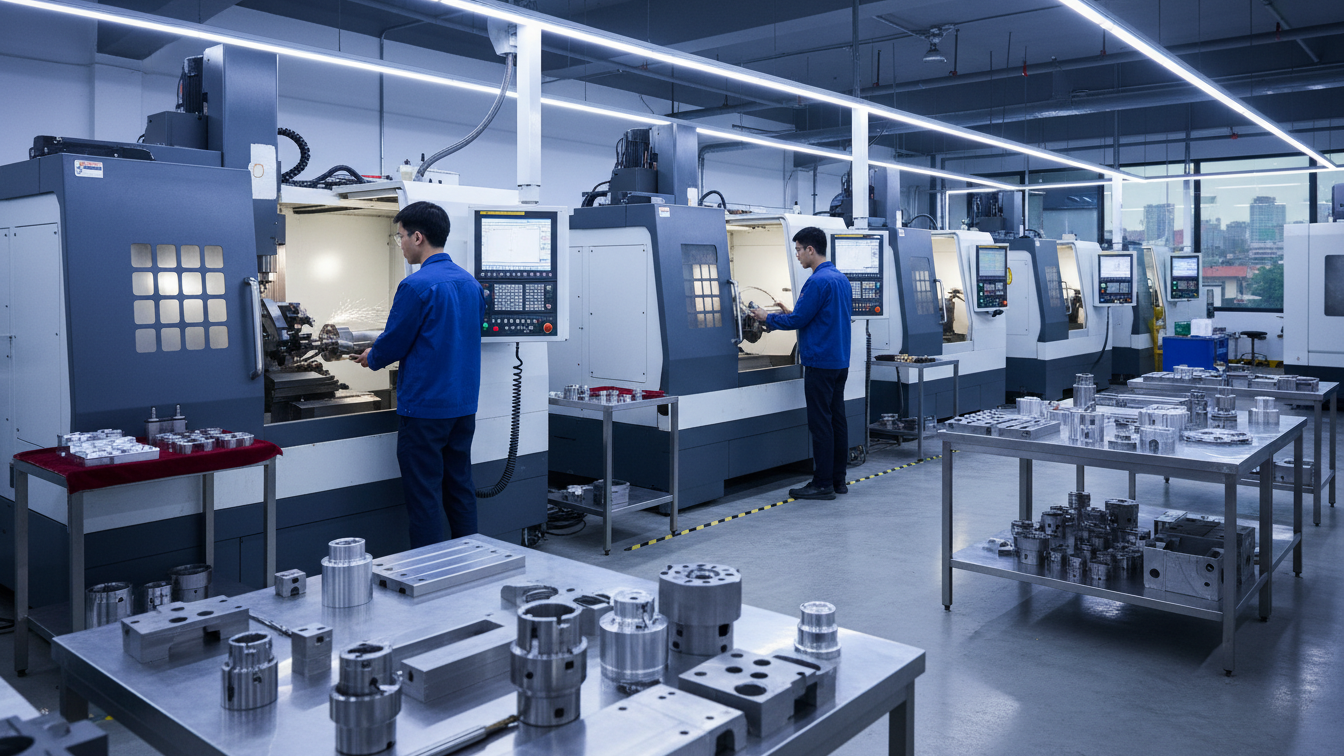
Vietnam Machining supports a broad range of CNC machining services, including CNC milling, CNC turning, Swiss machining, grinding, EDM, drilling, tapping, threading, boring, and secondary machining operations. These capabilities allow us to support different part geometries, production volumes, materials, and tolerance requirements.
CNC milling is suitable for parts with pockets, slots, holes, flat surfaces, and complex profiles. CNC turning is ideal for round components such as shafts, sleeves, bushings, pins, spacers, and threaded parts. Swiss machining is used for small, long, and high-precision components. Grinding and EDM are available for projects that require fine tolerances, hard materials, or complex features that standard machining cannot easily produce.
What materials can be used for CNC machined parts?
CNC machined parts can be produced from many metals and engineering plastics. Common materials include aluminum, stainless steel, carbon steel, alloy steel, tool steel, brass, copper, titanium, POM, nylon, PTFE, acrylic, and other industrial plastics. The right material depends on the part’s function, strength requirements, weight target, operating environment, corrosion resistance needs, and finishing expectations.
For example, aluminum is often selected for lightweight parts, good machinability, and attractive finishing options such as anodizing. Stainless steel is preferred when corrosion resistance and strength are important. Carbon steel and alloy steel are suitable for durable mechanical parts. Brass and copper are commonly used in electrical, thermal, and fluid-related applications. Engineering plastics can be useful when customers need lightweight, non-metallic, wear-resistant, or insulating components.
Can you support tight-tolerance CNC machining projects?
Yes. Vietnam Machining can support tight-tolerance CNC machining projects through careful engineering review, suitable supplier matching, proper machining setup, stable production control, and detailed inspection. Tight-tolerance parts require more than advanced equipment. They also require correct fixture design, toolpath planning, material control, temperature awareness, inspection methods, and experienced machinists.
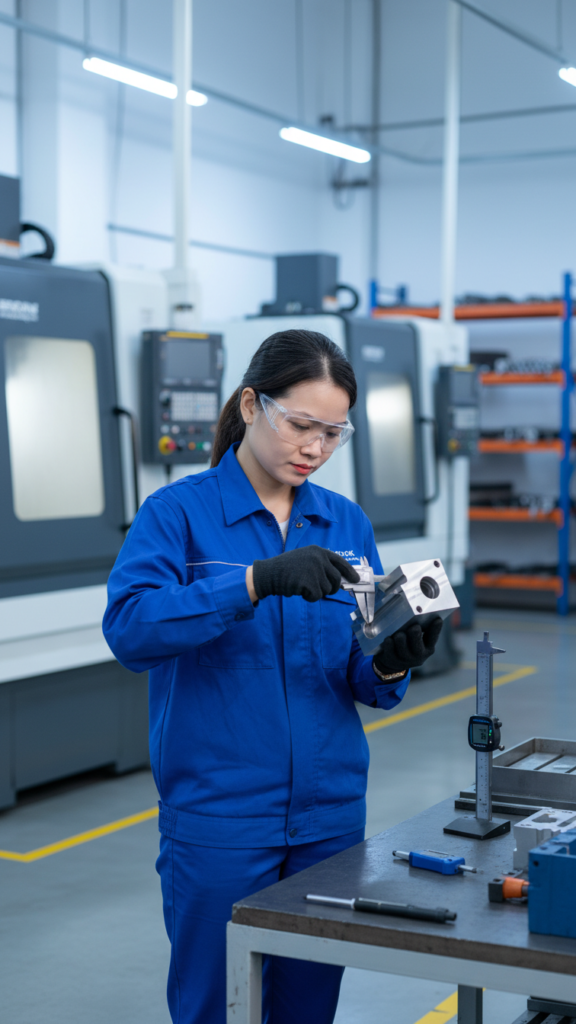
For high-precision components, we can support first article inspection, in-process checks, final dimensional inspection, and CMM verification when required. This helps confirm that critical dimensions, geometric features, hole locations, threads, flatness, concentricity, and surface requirements meet the approved drawing. As a result, buyers can receive CNC machined parts with stronger consistency and lower production risk.
Do you provide DFM support before production?
Yes. DFM support is an important part of our CNC machining workflow. Before production begins, we review drawings, 3D files, material choices, tolerance requirements, surface finish needs, wall thickness, hole depth, internal corners, thread specifications, and other design details that may affect machining cost or manufacturability.
This review helps identify possible production challenges early. For example, a part may include an unnecessarily tight tolerance, a deep pocket that increases machining time, a sharp corner that requires EDM, or a material that is difficult to machine at the target cost. By providing DFM feedback, Vietnam Machining helps buyers improve production efficiency, reduce avoidable cost, and maintain the functional performance of the component.
Can you handle both prototypes and mass production?
Yes. Vietnam Machining can support prototype machining, low-volume production, medium-volume orders, and repeat batch manufacturing. Prototype machining is useful when customers need to test part design, fit, function, assembly performance, or material selection before moving to larger production quantities.
Once the prototype is approved, we can support production scaling with stable machining processes, inspection planning, supplier coordination, and repeat order management. For mass production or regular batch orders, we focus on consistency, cycle time, tooling control, material supply, finishing quality, packaging, and delivery schedule. This allows buyers to move from development to long-term supply with a clearer and more controlled process.
What finishing options are available for CNC machined parts?
Finishing options for CNC machined parts may include anodizing, powder coating, plating, passivation, polishing, brushing, black oxide, heat treatment, laser marking, deburring, edge breaking, cleaning, and protective coating. The correct finishing process depends on the material, application, visual standard, corrosion resistance requirement, hardness requirement, and assembly environment.
For aluminum components, anodizing is often used to improve corrosion resistance and surface appearance. Stainless steel parts may require passivation to improve corrosion protection. Steel components may need plating, black oxide, coating, or heat treatment depending on performance requirements. In addition, deburring and edge breaking help ensure that parts are safe to handle and ready for assembly.
How do you ensure CNC machined parts meet quality requirements?
We ensure quality through a structured process that begins before machining starts. First, we review the drawing and clarify critical dimensions, tolerances, material standards, finishing requirements, and inspection expectations. Then we match the project with a suitable machining partner and confirm the production route.
During production, inspection may include first article checks, in-process measurement, final dimensional inspection, gauge checks, thread verification, surface roughness testing, and CMM inspection when needed. For export projects, we can also support inspection reports and documentation based on customer requirements. This process helps reduce defects, improve repeatability, and ensure that CNC machined parts meet the agreed specifications before shipment.
What industries do you serve?
Vietnam Machining serves customers across multiple industrial sectors, including machinery, automation, electronics, energy, automotive, medical devices, aerospace support, agricultural equipment, construction equipment, and general manufacturing. Each sector has different requirements, so we adapt the machining workflow based on the part’s application and risk level.
For machinery and automation, buyers often need durable parts with consistent tolerances and reliable assembly fit. For electronics, components may require small features, fine finishes, lightweight materials, and stable batch quality. For medical or precision equipment, inspection and material control become especially important. For heavy equipment, strength, corrosion resistance, and long-term durability are often the main priorities.
Can you support international buyers from the U.S. and EU?
Yes. Vietnam Machining is designed to support international buyers, especially companies from the U.S., EU, and other global markets. These customers often need more than machining capacity. They need clear communication, drawing review, material confirmation, quality control, export packaging, and reliable logistics coordination.
We help simplify the sourcing process by acting as a technical and project coordination partner in Vietnam. Instead of managing multiple suppliers directly, buyers can work with one team that understands manufacturing requirements and export expectations. This reduces communication gaps, improves visibility, and helps customers build a more stable CNC machining supply chain in Vietnam.
How does your quotation process work?
The quotation process begins when customers send their RFQ package. Ideally, this includes 2D drawings, 3D files, material requirements, quantity, tolerance requirements, surface finish specifications, finishing needs, and target delivery schedule. The more complete the information, the more accurate the quotation will be.
After receiving the RFQ, our team reviews the technical requirements and identifies the suitable machining process. We may ask clarification questions if important details are missing. Then we prepare pricing, lead time, material sourcing information, finishing considerations, and inspection requirements. This helps buyers understand not only the unit cost but also the full production plan behind the quotation.
What files should I send for a CNC machining quote?
For the most accurate CNC machining quote, you should send both 2D drawings and 3D files. A 3D file helps the machining team understand the part geometry, while a 2D drawing defines tolerances, threads, material grade, surface finish, heat treatment, coating, and other technical requirements. Common 3D file formats include STEP, STP, IGS, IGES, and SolidWorks files.
You should also include quantity, target lead time, expected annual volume if available, finishing requirements, inspection requirements, and any special packaging instructions. If the part is used in a regulated or critical application, it is helpful to mention that early so inspection and documentation needs can be planned correctly.
Can you help reduce the cost of CNC machined parts?
Yes. Cost optimization is part of our engineering-led approach. CNC machining cost is affected by material type, tolerance requirements, part complexity, machining time, setup quantity, surface finish, finishing method, inspection level, and order volume. By reviewing these factors early, Vietnam Machining can suggest practical ways to improve cost efficiency.
For example, we may recommend adjusting non-critical tolerances, changing internal corner design, selecting a more machinable material, improving fixture strategy, combining operations, or choosing a more suitable finishing method. However, cost reduction should never compromise the part’s function. Our goal is to help buyers reduce unnecessary cost while protecting performance, quality, and reliability.
How can I request a CNC machining quote?
You can request a CNC machining quote by sending your drawings, 3D files, material requirements, quantity, tolerance needs, surface finish requirements, finishing expectations, and target delivery schedule. Our team will review your project, confirm technical details, identify the suitable machining process, and prepare a quotation based on your requirements.
For the fastest response, include all relevant specifications in the first RFQ package. If you are still developing the design, you can also send preliminary files for DFM review. Vietnam Machining can help you evaluate manufacturability, estimate production feasibility, and prepare the project for prototype or batch production.