
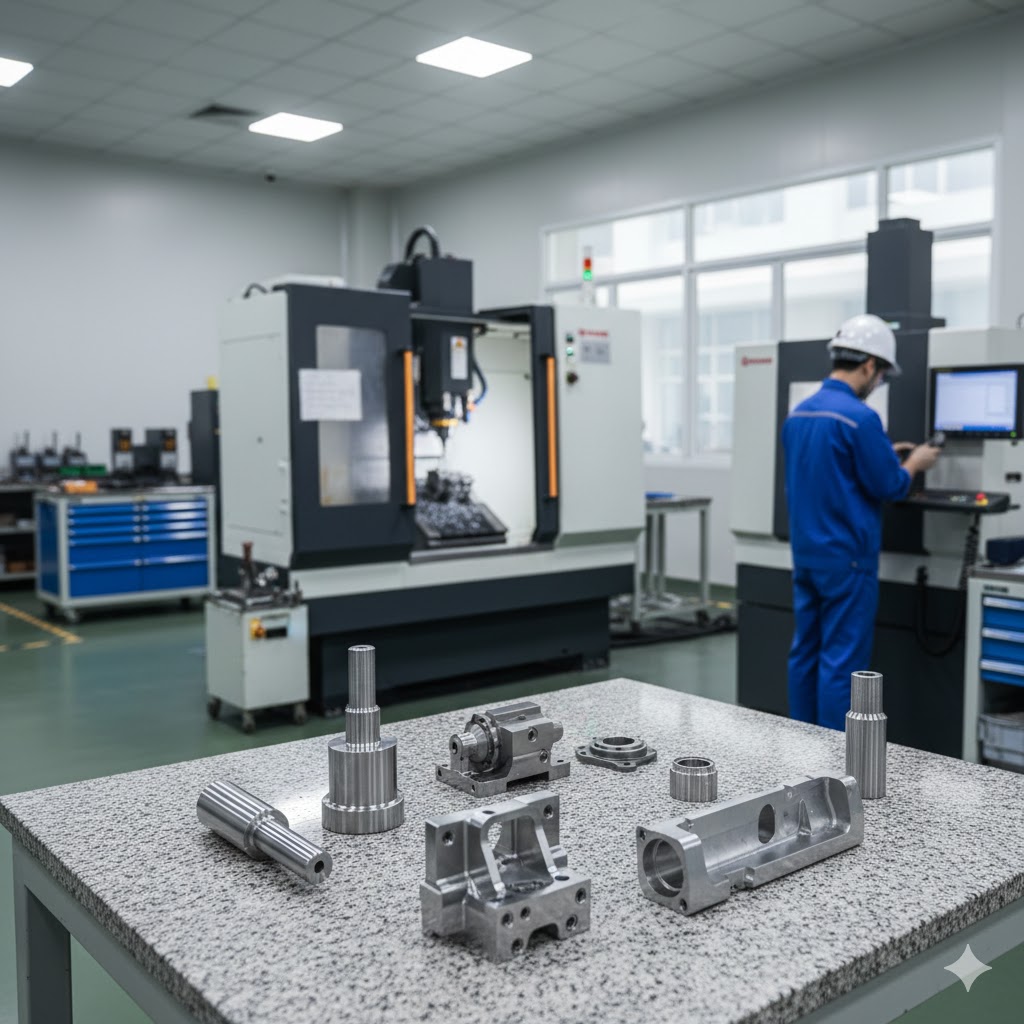
High Precision CNC in Vietnam has become a critical solution for global manufacturers that require tight tolerances, consistent repeatability, and micron-level dimensional control. As industries such as aerospace support, medical devices, automotive systems, and precision electronics evolve, tolerance requirements continue to shrink. Consequently, selecting a capable machining partner is no longer optional but strategic.
High Precision CNC services in Vietnam combine advanced machining centers, stable production environments, and structured quality systems. These capabilities allow suppliers to meet strict international standards while maintaining competitive production costs. Therefore, buyers at the decision stage increasingly evaluate Vietnam as a serious high-accuracy manufacturing hub.
Why High Precision CNC Matters for Industrial Applications
High Precision CNC plays a fundamental role in applications where dimensional deviation directly affects performance. Components such as turbine shafts, medical instrument housings, hydraulic valve bodies, and optical mounts require extreme accuracy.
Even minor dimensional variation can lead to mechanical vibration, leakage, premature wear, or assembly misalignment. For this reason, tolerance control must be embedded into every stage of production, from material inspection to final verification.
Moreover, as product designs become more compact and complex, geometric tolerances tighten. Manufacturers must therefore rely on machining systems capable of micron-level consistency rather than conventional machining setups.
Vietnamese high precision machining facilities have invested significantly in equipment and process optimization to meet these advanced requirements.
High Precision CNC Vietnam Capabilities and Equipment
Modern High Precision CNC Vietnam facilities operate 4-axis and 5-axis machining centers with high-speed spindles and advanced thermal stability systems. These machines minimize vibration and maintain geometric alignment during operation.
Climate-controlled workshops are essential for maintaining consistent machining tolerances. Temperature fluctuations can cause material expansion or contraction, which directly affects dimensional accuracy. Therefore, environmental control enhances production reliability.
Advanced CAM software further optimizes toolpaths to reduce deflection and tool wear. By simulating machining sequences before production begins, engineers prevent unexpected errors and improve consistency.
Additionally, high-resolution coordinate measuring machines validate dimensions down to micron-level increments. Optical measurement systems and surface roughness testers ensure compliance with design specifications.
Achieving Tight Machining Tolerances
Process Control and Stability
Maintaining tight machining tolerances requires more than advanced machines. It demands disciplined process control.
Incoming material inspection verifies chemical composition and mechanical properties. In-process measurement checks critical dimensions during machining cycles. Final inspection confirms conformity before shipment.
Statistical process control techniques monitor trends and detect deviations early. As a result, variation is minimized before it escalates into quality issues.
Tool selection and cutting parameter optimization also play a crucial role. Stable fixturing systems prevent micro-movement during cutting, which enhances dimensional repeatability.
Surface Finish and Geometric Accuracy
High precision machining not only concerns dimensional tolerance but also surface integrity. Surface roughness directly influences mechanical performance, especially in sealing applications and sliding components.
Optimized coolant systems reduce heat generation and prevent thermal distortion. Meanwhile, balanced spindle systems minimize vibration, ensuring smooth surface finishes.
Geometric dimensioning and tolerancing requirements such as concentricity, perpendicularity, and flatness are validated through structured inspection protocols. Consequently, complex parts maintain structural integrity during assembly.
Micron Level CNC Manufacturing in Vietnam
Micron level CNC capability distinguishes advanced machining suppliers from standard providers. Tolerances measured in microns require machine rigidity, environmental control, and experienced engineering oversight.
Vietnamese high precision facilities increasingly serve industries where micron-level accuracy is mandatory. Medical device components, semiconductor fixtures, and precision tooling inserts represent typical applications.
Because micron-level tolerance leaves no margin for error, calibration and maintenance routines are strictly documented. Machines undergo regular inspection to maintain alignment and spindle stability.
Furthermore, real-time monitoring systems detect deviations during machining. This proactive approach reduces scrap rates and enhances batch consistency.
Materials Suitable for High Precision CNC
High precision machining applies to a wide range of materials, each presenting unique challenges.
Aluminum alloys provide excellent machinability and dimensional stability.
Stainless steel requires optimized cutting strategies to prevent work hardening.
Tool steel demands rigid fixturing and controlled heat management.
Engineering plastics require precise feed rate control to avoid deformation.
Vietnamese suppliers tailor machining parameters to material characteristics. Therefore, part integrity remains consistent across different production batches.
Surface finishing options such as anodizing, grinding, and precision polishing further enhance performance in high-spec applications.
Industries That Require High Precision CNC
High Precision CNC Vietnam supports industries where failure tolerance is minimal.
Aerospace support sectors require structural components with strict dimensional alignment.
Medical device manufacturers depend on accuracy for patient safety.
Automotive systems demand precise engine and transmission components.
Electronics and semiconductor industries rely on micron-level fixture accuracy.
Each sector requires documentation, traceability, and reliable process control. Vietnamese high precision facilities increasingly align with international compliance standards to support these markets.
Moreover, flexible production capacity allows both prototyping and scalable manufacturing. Buyers can validate design feasibility before committing to full production volumes.
CNC Milling Vietnam Integration
CNC Milling Vietnam services complement high precision operations by supporting multi-surface and complex geometry machining. Many high precision components require both cylindrical and prismatic features.
Integrating milling and turning capabilities within a single facility reduces handling time and tolerance stack-up. This consolidation strengthens dimensional alignment and improves production efficiency.
For complex assemblies, such integration simplifies project management and ensures consistent quality control across all components.
Machining Tolerances Expertise
Machining tolerances represent the core metric of high precision manufacturing. Vietnamese suppliers implement structured measurement protocols to control dimensional variation.
Tolerance management begins at the design review stage. Engineers evaluate geometric complexity and recommend manufacturability improvements. During production, real-time measurement confirms compliance at critical checkpoints.
This systematic approach ensures that tolerance specifications are consistently met rather than inspected only at final stages.
Micron Level CNC Technology
Micron level CNC capability requires advanced machine calibration, rigid fixturing systems, and experienced technical oversight. Suppliers capable of micron accuracy maintain strict environmental control and preventive maintenance schedules.
Such capability supports industries that demand extreme precision and repeatability. By investing in high-resolution measurement systems, Vietnamese facilities enhance their competitiveness in global markets.
Strategic Considerations for Decision-Stage Buyers
At the decision stage, selecting a High Precision CNC partner requires evaluating technical depth, quality systems, and engineering communication.
Machine specifications alone do not guarantee performance. Buyers should assess inspection capabilities, documentation practices, and process stability records.
Clear technical drawings, tolerance definitions, and surface finish requirements accelerate quotation accuracy. Pilot runs validate machining strategies before scaling to larger volumes.
Long-term partnerships thrive on transparency and consistent communication. Vietnam’s growing high precision ecosystem provides a balance of technical competence and cost efficiency.
Conclusion
High Precision CNC Vietnam has matured into a reliable solution for tight tolerance manufacturing across demanding industrial sectors. Through advanced machining centers, climate-controlled environments, and structured quality systems, Vietnamese suppliers achieve micron-level accuracy with consistent repeatability.
By combining technical capability with competitive cost structure and export-ready infrastructure, Vietnam strengthens its position as a high precision manufacturing hub. For companies seeking reliable machining solutions at the decision stage, partnering with a qualified high precision CNC provider in Vietnam delivers measurable operational and strategic value.