Low Carbon Machining is rapidly becoming a strategic priority for global manufacturers sourcing from Vietnam. As carbon regulations tighten and sustainability commitments expand, Low Carbon Machining enables CNC suppliers to reduce emissions while maintaining precision and cost efficiency.
In 2026, procurement teams no longer evaluate suppliers solely on price and quality. Instead, environmental performance and carbon transparency increasingly influence decision-making. Therefore, understanding how Low Carbon Machining integrates into Vietnam’s production ecosystem is essential for buyers operating at the decision stage.
Low Carbon Machining in Vietnam’s Industrial Context
Low Carbon Machining refers to CNC production strategies designed to minimize greenhouse gas emissions across the manufacturing lifecycle. These strategies address energy consumption, material efficiency, logistics optimization, and facility management.
Vietnam’s machining industry traditionally benefited from competitive labor costs. However, sustainability expectations are reshaping competitive advantage. Consequently, Low Carbon Machining now complements cost and quality metrics rather than replacing them.
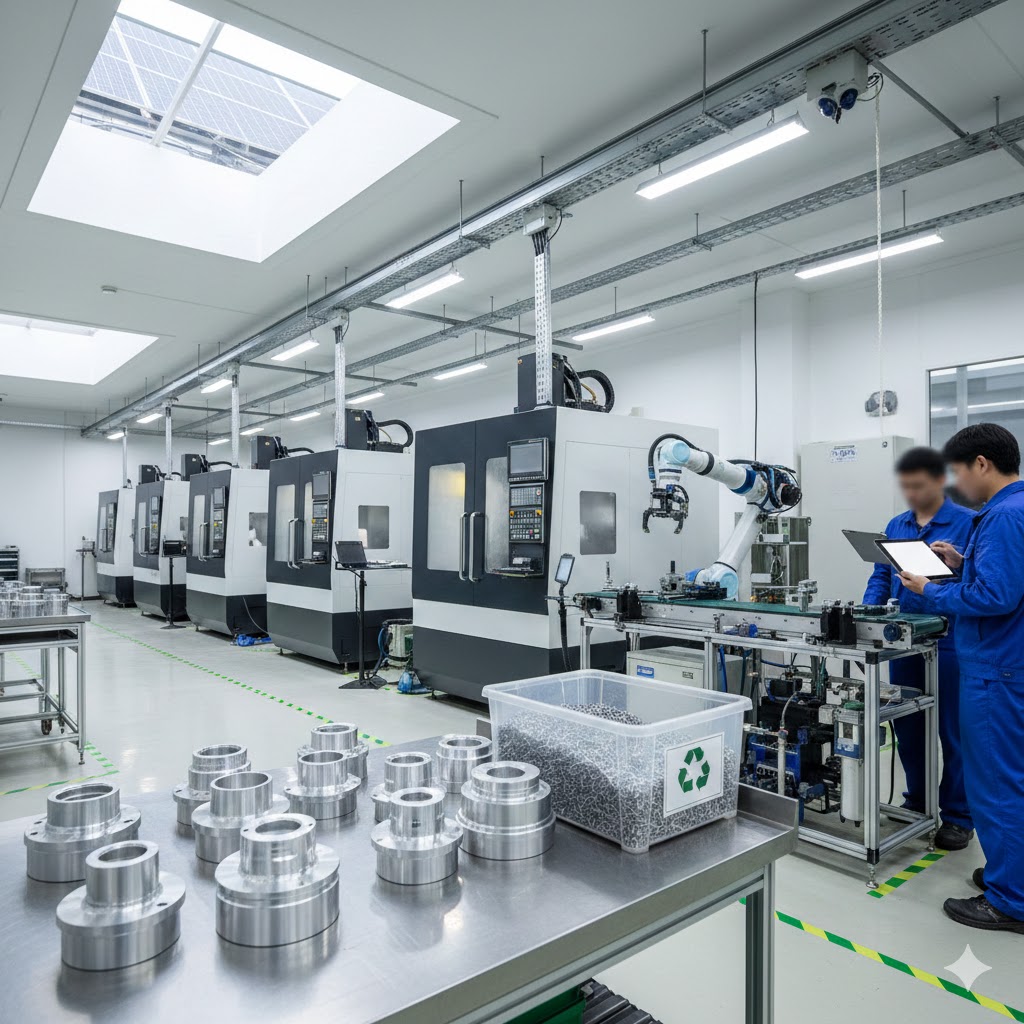
Modern Vietnamese CNC facilities are adopting energy-efficient equipment, optimized toolpaths, and renewable energy integration. As a result, emission intensity per unit of output continues to decline.
Energy Efficiency as the Core of Low Carbon Machining
Energy consumption accounts for a significant portion of machining-related emissions. Therefore, energy optimization represents the most impactful pathway for Low Carbon Machining.
Factories increasingly invest in:
High-efficiency spindle motors
Smart servo drive systems
Automated machine standby modes
Energy monitoring dashboards
Because advanced CNC machines consume less electricity per cycle, upgrading equipment directly reduces carbon intensity.
Moreover, optimized production scheduling minimizes idle machine time. By consolidating operations into efficient batch runs, facilities reduce unnecessary energy use.
These practical measures demonstrate that Low Carbon Machining delivers measurable environmental benefits without compromising throughput.
Sustainable CNC Process Optimization
Sustainable CNC practices play a crucial role in emission reduction strategies. Sustainable CNC involves optimizing programming and workflow to reduce resource waste.
For example, improved toolpath strategies shorten machining time. Reduced cycle time lowers energy consumption per part. Furthermore, high-precision programming minimizes scrap rates.
Coolant recycling systems and chip management processes also support sustainability objectives. Instead of discarding metal chips, facilities recycle them into raw material supply chains.
Buyers seeking advanced sustainability performance should evaluate supplier implementation of Sustainable CNC practices during technical audits.
CO2 Reduction Through Operational Strategies
Effective CO2 reduction requires coordinated operational improvements rather than isolated initiatives.
Key reduction strategies include:
Renewable energy integration such as rooftop solar systems
Material yield improvement to reduce scrap
Consolidated shipment planning to lower logistics emissions
Digital monitoring of energy intensity per production batch
By combining renewable energy and operational optimization, machining suppliers significantly lower Scope 1 and Scope 2 emissions.
Additionally, carbon accounting systems provide visibility into emission sources. This data-driven approach supports continuous improvement and regulatory compliance.
Suppliers capable of demonstrating quantifiable CO2 reduction outcomes strengthen their ESG positioning.
Integration with Vietnam Green Manufacturing
Low Carbon Machining operates within the broader framework of Vietnam Green Manufacturing. While green manufacturing encompasses environmental governance and factory-level transformation, low carbon strategies focus specifically on emission reduction during CNC operations.
For example, green factory initiatives may include environmental certification and waste management. Low Carbon Machining complements these measures by targeting energy intensity and carbon metrics at the production level.
Understanding this integration helps buyers evaluate sustainability maturity across multiple dimensions.
Case Study: Implementing Low Carbon Machining in Vietnam
Consider a mid-sized CNC supplier in Vietnam serving automotive clients. Prior to sustainability upgrades, the facility relied on older machining centers with limited energy monitoring.
After implementing energy-efficient equipment and digital monitoring systems, the supplier achieved:
Reduction in electricity consumption per unit
Improved scrap recovery rates
Shorter machining cycle times
Lower carbon intensity per production batch
Furthermore, rooftop solar installation offset a portion of grid electricity usage. Within two years, the supplier documented measurable emission reduction aligned with client sustainability goals.
This case demonstrates that Low Carbon Machining delivers both environmental and operational benefits.
Regulatory Drivers and Market Pressure
Global climate regulations continue to influence sourcing strategies. Carbon border adjustment mechanisms and corporate climate disclosure rules increase pressure on supply chains.
Consequently, buyers increasingly require emission transparency from machining suppliers.
Vietnam’s industrial modernization policies also encourage renewable energy adoption and efficiency upgrades. Therefore, Low Carbon Machining aligns with both global and domestic sustainability trajectories.
Suppliers that delay sustainability investment risk exclusion from environmentally regulated markets.
Measuring and Reporting Carbon Performance
Accurate measurement supports credible Low Carbon Machining implementation.
Facilities commonly track:
Kilowatt-hours per production batch
Carbon intensity per unit output
Renewable energy share of total consumption
Material recycling rates
Digital reporting tools simplify data collection and analysis. Furthermore, integration with ERP and MES systems enables automated sustainability reporting.
Transparent reporting strengthens supplier credibility during ESG audits and investor evaluations.
Business Benefits Beyond Compliance
Although environmental compliance remains important, Low Carbon Machining also improves operational resilience.
Energy efficiency lowers operating expenses over time. Reduced scrap improves material yield. Streamlined workflows enhance productivity.
Additionally, sustainability alignment enhances brand reputation among environmentally conscious customers.
Therefore, carbon reduction initiatives create both environmental and financial returns.
Evaluating Low Carbon Machining Capability
Decision-stage buyers should evaluate supplier sustainability readiness using objective criteria.
Key evaluation areas include:
Availability of energy monitoring systems
Renewable energy integration capacity
Carbon accounting documentation
Scrap recycling processes
Continuous improvement initiatives
Requesting documented emission reduction metrics ensures supplier claims are evidence-based.
Moreover, combining sustainability assessment with technical capability evaluation strengthens overall sourcing strategy.
Future Outlook for Low Carbon Machining in Vietnam
As technology evolves, Low Carbon Machining will increasingly leverage automation and artificial intelligence.
Predictive maintenance reduces energy waste. AI-driven toolpath optimization improves material efficiency. Real-time carbon dashboards enhance transparency.
Over time, carbon intensity benchmarking may become a standard procurement metric alongside price and quality.
Vietnam’s competitive position will depend not only on cost efficiency but also on sustainable production leadership.
Conclusion
Low Carbon Machining in Vietnam represents a practical pathway toward green production in 2026. Through energy optimization, Sustainable CNC strategies, and measurable CO2 reduction initiatives, machining suppliers increasingly align with global climate expectations.
For decision-stage buyers, evaluating Low Carbon Machining capability reduces regulatory risk and strengthens supply chain resilience. When integrated within Vietnam Green Manufacturing frameworks, carbon reduction strategies enhance both environmental responsibility and operational performance.
In a competitive global manufacturing landscape, suppliers that demonstrate credible emission reduction leadership will secure stronger and more sustainable partnerships.