
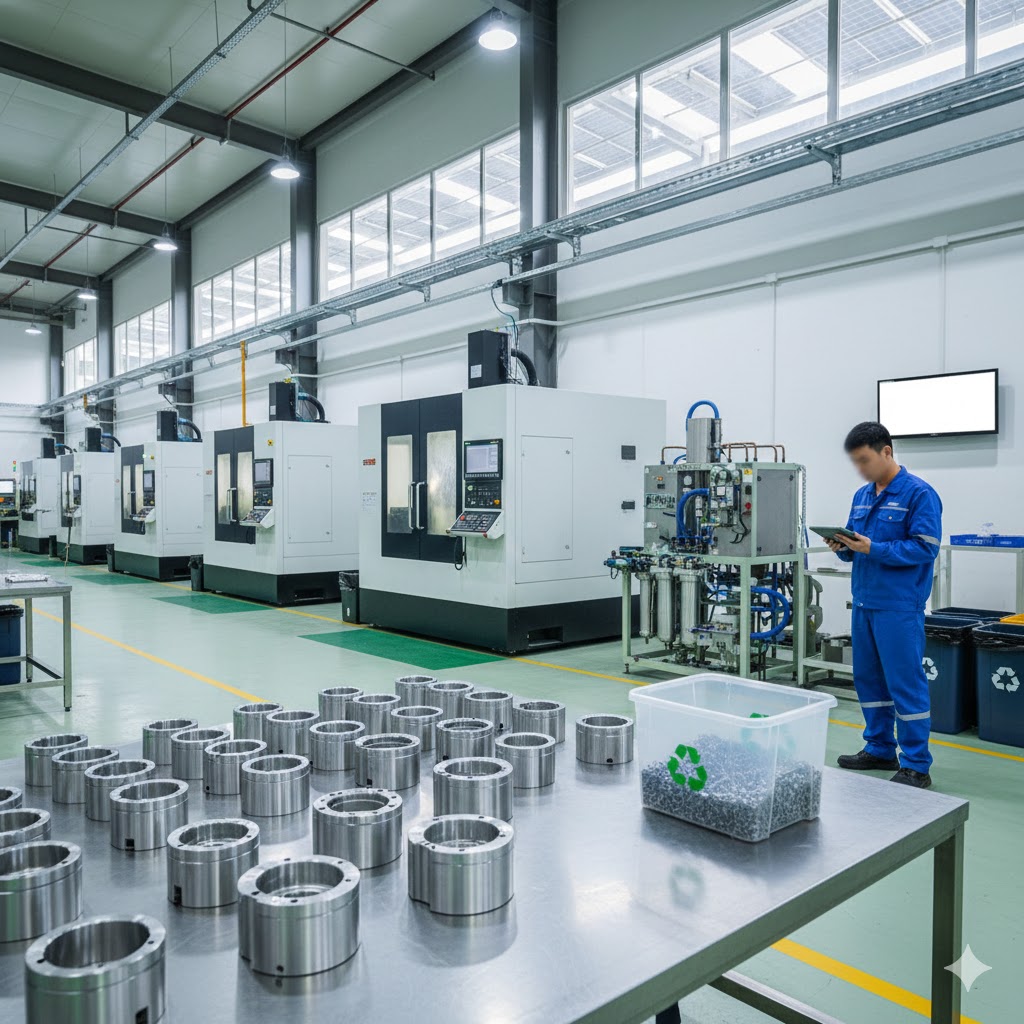
Green Factory Vietnam has become a strategic benchmark for machining suppliers serving global OEMs. As sustainability expectations expand across regulated markets, certification at facility level signals measurable environmental commitment. Consequently, procurement teams increasingly evaluate environmental infrastructure alongside cost and quality performance.
In 2026, environmental compliance is no longer optional. Instead, it shapes long-term supplier selection. Therefore, understanding how Green Factory Vietnam certification applies to CNC machining facilities is essential for buyers operating at the consideration stage.
Understanding Green Factory Vietnam Certification
A certified green manufacturing facility integrates building design, energy systems, waste management, and environmental governance into a structured framework. Rather than focusing on isolated carbon reduction measures, certification evaluates the entire factory ecosystem.
Typically, compliant machining facilities implement:
Energy-efficient production equipment
Environmental monitoring systems
Water recycling infrastructure
Structured waste segregation processes
Documented environmental reporting
Because these systems are audited, certification reflects real implementation rather than marketing positioning.
Moreover, third-party verification enhances credibility. As a result, certified facilities gain stronger visibility in international tenders.
Infrastructure Requirements for Sustainable CNC Facilities
Sustainable factory certification requires both physical upgrades and management systems. Energy efficiency forms the foundation. However, infrastructure improvements extend further.
Common facility upgrades include:
Rooftop solar installations
LED lighting retrofits
High-efficiency HVAC systems
Smart energy monitoring dashboards
Advanced coolant recycling systems
In addition, environmental data tracking allows operators to monitor electricity consumption per production unit. This data-driven approach supports continuous improvement.
Although certification involves upfront investment, operational savings often offset long-term costs.
LEED Manufacturing Principles in Vietnam
LEED manufacturing standards influence many industrial sustainability programs. LEED evaluates building efficiency, water usage, energy performance, and indoor environmental quality.
While not every machining facility pursues full LEED accreditation, its framework guides sustainable factory transformation. For example, energy benchmarking helps identify inefficiencies. Water optimization programs reduce resource waste.
By aligning with LEED manufacturing principles, Vietnamese suppliers demonstrate compatibility with global sustainability benchmarks. Consequently, they become more attractive to multinational buyers.
Sustainable Supply Chain Alignment
A certified factory must also consider upstream and downstream impact. Therefore, integrating a Sustainable supply approach strengthens overall environmental performance.
Suppliers may prioritize recycled aluminum, certified steel sources, and consolidated logistics planning. Waste materials such as metal chips are often redirected into recycling networks.
Furthermore, transparent reporting of material sourcing enhances buyer confidence. As sustainability disclosure requirements expand, supply chain integration becomes increasingly important.
Relationship with Vietnam Green Manufacturing
Factory-level certification operates within the broader strategy of Vietnam Green Manufacturing. While Vietnam Green Manufacturing focuses on operational sustainability practices such as energy-efficient machining and emission reduction, certification validates infrastructure compliance.
In other words, operational initiatives reduce environmental impact, whereas certification formalizes measurable standards. Buyers evaluating suppliers should examine both implementation and formal recognition.
Certification Process Overview
The pathway to factory certification typically follows several structured steps.
First, environmental audits establish baseline performance. Next, improvement plans address energy and waste management gaps. After infrastructure upgrades, third-party auditors conduct on-site verification.
Following successful evaluation, certification bodies issue formal recognition. Because compliance must be maintained, periodic reassessment ensures ongoing discipline.
This structured process reinforces accountability and long-term sustainability performance.
Regulatory Drivers and Market Expectations
International climate policies increasingly influence supply chains. Carbon border adjustments and expanded ESG disclosure frameworks require measurable emission transparency.
As a result, certified facilities reduce compliance uncertainty for global buyers. Moreover, proactive sustainability investment positions suppliers ahead of regulatory shifts.
Vietnam’s industrial modernization strategy also encourages renewable adoption. Therefore, sustainability alignment supports both domestic policy and global trade access.
Operational and Financial Advantages
Beyond environmental benefits, sustainable factory infrastructure delivers operational gains.
Energy-efficient equipment lowers electricity costs. Improved ventilation stabilizes machining temperature conditions. Waste reduction increases material yield.
Additionally, structured governance improves documentation discipline. Consequently, certified facilities often demonstrate stronger management maturity.
These advantages create long-term financial resilience.
Evaluating Certified Machining Suppliers
Consideration-stage buyers should evaluate environmental maturity systematically.
Key evaluation criteria include:
Verification by recognized certification bodies
Availability of energy performance metrics
Renewable energy integration capability
Waste management documentation
Environmental audit history
Requesting supporting documentation ensures objective comparison. Furthermore, facility visits provide additional clarity regarding implementation depth.
Future Outlook
Sustainability expectations will continue rising beyond 2026. As renewable technologies become more accessible, environmental certification may evolve from differentiator to industry baseline.
Digitalization will likely enhance monitoring precision. AI-based energy optimization may further reduce resource consumption.
Therefore, machining suppliers investing early in structured certification strengthen their competitive position.
Conclusion
Green Factory Vietnam certification signals structured environmental infrastructure and governance maturity within CNC machining facilities. Through LEED manufacturing alignment, sustainable supply integration, and audited compliance systems, certified suppliers demonstrate readiness for evolving global standards.
For buyers operating at the consideration stage, evaluating certified factories reduces regulatory risk and strengthens supply chain transparency. When combined with Vietnam Green Manufacturing operational practices, certification enhances both environmental responsibility and industrial performance.
In a competitive manufacturing environment, suppliers that align infrastructure, governance, and sustainability strategy will secure stronger long-term partnerships.