Defense Machining in Vietnam has rapidly evolved into a reliable solution for global defense contractors seeking precision, cost control, and supply chain resilience. As geopolitical risks and procurement standards tighten, manufacturers require partners capable of delivering military grade CNC components with strict tolerances, traceability, and confidentiality. Vietnam’s advanced machining ecosystem now supports complex defense and tactical programs with international compliance and engineering depth.
Vietnam has strengthened its position as a precision manufacturing hub over the last decade. Consequently, defense contractors are increasingly evaluating Vietnam for high-precision CNC production. From structural housings and armored brackets to lightweight aluminum enclosures and hardened steel assemblies, modern machining facilities in Vietnam meet demanding defense requirements while maintaining competitive lead times.
Defense Machining Capabilities in Vietnam
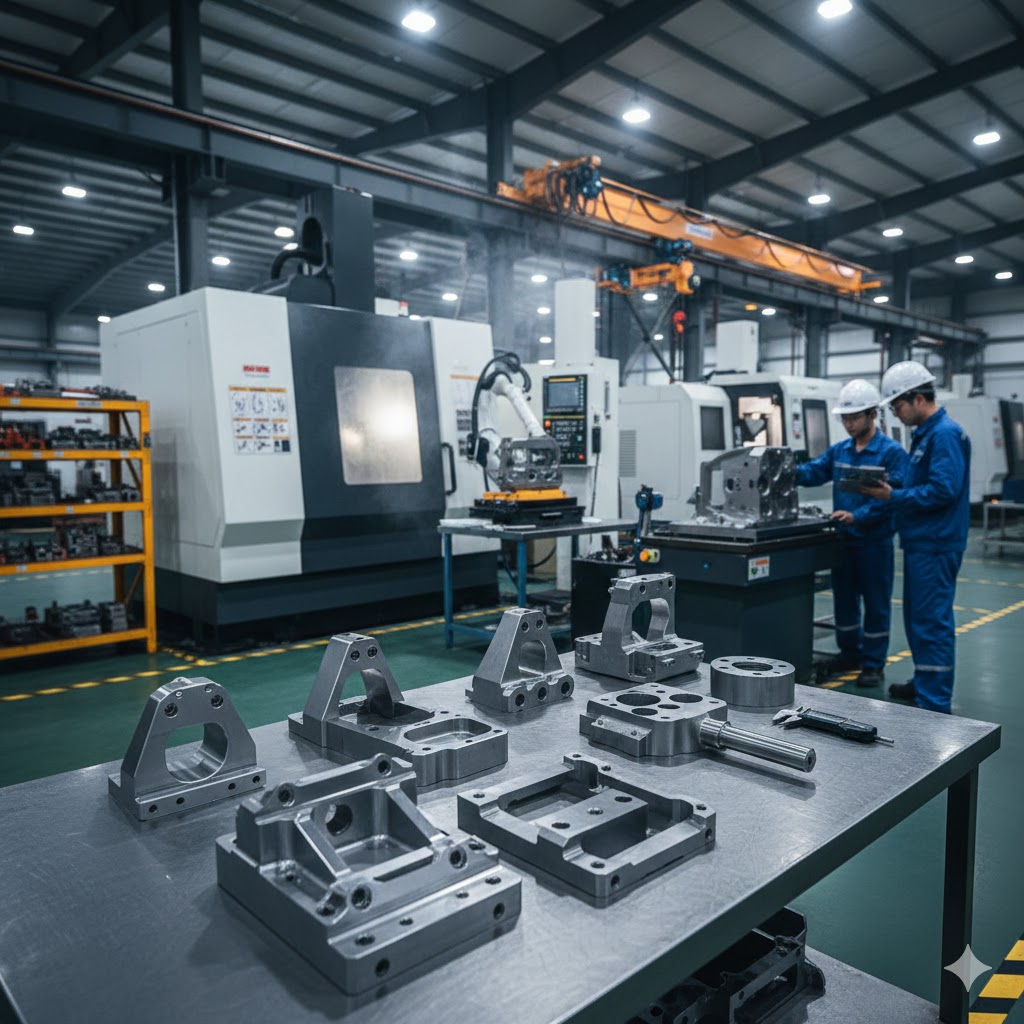
Defense Machining in Vietnam integrates multi-axis CNC milling, precision turning, grinding, and secondary finishing under tightly controlled production environments. Facilities operate advanced 3-axis, 4-axis, and 5-axis machining centers capable of producing complex geometries required for aerospace-grade and defense-grade components.
Precision Tolerances and Material Expertise
Defense components require tight dimensional tolerances, often within ±0.005 mm depending on application. Vietnamese machining facilities support:
- High-strength aluminum alloys for lightweight structures
- Stainless steel for corrosion resistance
- Tool steels for high-load applications
- Titanium for high-performance assemblies
Material traceability is maintained through documented batch control systems. Moreover, inspection protocols include CMM verification, surface roughness testing, and hardness testing to ensure compliance with defense specifications.
Secure Production Environment
Defense Machining projects require strict confidentiality. Vietnamese manufacturers implement:
- Controlled production access
- NDA agreements and IP protection
- Isolated project teams for sensitive programs
- Secure digital file management systems
As a result, overseas buyers can confidently outsource precision parts without compromising proprietary data.
Military Grade CNC Standards and Compliance
Modern Military grade CNC production requires more than machining capability. It demands structured quality systems, risk management procedures, and compliance with international industrial standards.
Quality Management Systems
Vietnamese defense machining facilities commonly operate under ISO 9001 certification. Additionally, many advanced factories support ISO 14001 for environmental management and ISO 45001 for occupational safety. For defense-oriented clients, adherence to documented process control ensures consistent repeatability across batches.
Process Validation and Documentation
Defense Machining programs require full documentation including:
- First Article Inspection Reports
- Dimensional inspection records
- Material certificates
- Surface treatment validation
Furthermore, serialized components allow traceability throughout the product lifecycle. This approach aligns with procurement expectations from U.S., EU, and allied defense supply chains.
Applications in Tactical Equipment Manufacturing
Precision machining plays a critical role in tactical equipment manufacturing. Components often serve in communication systems, armored vehicles, surveillance equipment, weapon mounting systems, and transport platforms.
Typical machined parts include:
- Mounting brackets and structural frames
- Heat-dissipating aluminum housings
- Shock-resistant enclosures
- Precision shafts and rotating assemblies
- Reinforced connectors and couplings
Defense Machining in Vietnam supports both prototype development and mid-volume production. While large-scale weapons manufacturing is heavily regulated, subassemblies and non-controlled components remain suitable for outsourced machining under compliant trade frameworks.
Engineering Support and DFM Optimization
Beyond machining, engineering collaboration enhances manufacturability. Vietnamese partners often provide Design for Manufacturing support to reduce machining time, improve yield rates, and optimize material utilization.
Engineering teams assist with:
- Tolerance stack analysis
- Material substitution evaluation
- Weight reduction strategies
- Surface finish optimization
Therefore, defense buyers gain cost efficiencies without sacrificing mechanical performance.
Supply Chain Resilience and Risk Diversification
Global procurement strategies increasingly emphasize diversification away from single-source regions. Vietnam offers geographic and geopolitical advantages that support long-term defense procurement stability.
Compared to traditional manufacturing centers, Vietnam provides:
- Competitive labor costs
- Growing infrastructure investment
- Expanding port capacity
- Stable industrial growth policies
In addition, Vietnam’s participation in multiple trade agreements improves cross-border logistics efficiency. Consequently, defense programs benefit from predictable lead times and lower exposure to tariff volatility.
Defense Machining and Advanced Multi-Axis Technology
High-complexity defense parts often require 5-axis simultaneous machining. Vietnamese CNC workshops now integrate advanced CAD/CAM software with automated tool calibration systems to achieve superior surface finish and dimensional precision.
Automated probing systems verify in-process measurements. As a result, scrap rates decrease and consistency improves across production runs. Additionally, robotic part handling reduces human error and enhances throughput for repetitive machining cycles.
Surface Treatment and Secondary Operations
Defense components frequently require specialized finishes to enhance corrosion resistance and durability. Vietnamese machining providers coordinate secondary processes including:
- Anodizing for aluminum
- Black oxide treatment for steel
- Powder coating for protective surfaces
- Precision grinding and polishing
By consolidating machining and finishing services, buyers reduce coordination complexity and minimize shipping delays between suppliers.
Integration with Broader Industrial Manufacturing
Defense Machining operations in Vietnam are often integrated within larger industrial production ecosystems. This integration allows efficient scaling and shared technical expertise across sectors.
For a broader overview of related capabilities, explore Vietnam Industrial Components to understand how industrial machining infrastructure supports defense-related programs.
Alignment with Specialized Industrial Manufacturing
Defense machining is a specialized branch of high-precision industrial production. Many facilities serving defense contracts also operate within broader industrial manufacturing frameworks.
Learn more about cross-sector expertise in Specialized Industrial Component Manufacturing, where precision machining capabilities extend into energy, heavy equipment, and advanced engineering industries.
Why Choose Vietnam for Defense Machining
Several factors make Vietnam a compelling destination for defense-oriented machining projects:
- Cost Efficiency
Vietnam offers competitive pricing without compromising quality standards. Lower operational costs enable optimized procurement budgets. - Skilled Technical Workforce
Technical universities and vocational training programs continuously supply skilled CNC programmers and machine operators. - Expanding Technological Adoption
Factories increasingly adopt Industry 4.0 solutions including ERP integration, real-time production monitoring, and automated inspection. - Strong Engineering Collaboration
Engineering teams support rapid prototyping and iterative improvements during early project phases. - Long-Term Partnership Potential
Vietnamese manufacturers emphasize relationship-driven collaboration, which benefits multi-year defense programs.
Procurement Considerations for Decision-Stage Buyers
At the decision stage, defense buyers must evaluate:
- Quality certification validity
- Equipment capability and machine list
- Inspection and testing infrastructure
- Data security policies
- Financial stability of supplier
Conducting remote audits, virtual factory tours, and pilot production runs allows buyers to validate performance before committing to full-scale production.
Defense Machining partnerships require transparency and reliability. Therefore, selecting a Vietnamese CNC partner with proven export experience reduces onboarding risk and accelerates project timelines.
Future Outlook of Defense Machining in Vietnam
Vietnam’s manufacturing landscape continues to evolve. Investments in automation, high-precision tooling, and international compliance strengthen its role in advanced machining sectors. As defense supply chains globalize further, Vietnam is positioned to capture a larger share of precision component outsourcing.
Furthermore, sustainability initiatives are gaining traction. Energy-efficient machining centers and waste reduction programs align with ESG expectations from Western procurement agencies. Consequently, Vietnam-based defense machining programs can satisfy both performance and sustainability objectives.
Request a Defense Machining Consultation
Defense Machining in Vietnam offers a strategic balance between precision, cost efficiency, and supply chain stability. Whether you require military grade CNC parts for structural assemblies or precision components for tactical equipment systems, Vietnam’s advanced machining ecosystem can support your program.
If you are evaluating new suppliers for defense-grade projects, contact our engineering team today. We provide detailed capability reviews, sample production runs, and full compliance documentation to support your procurement decision.