
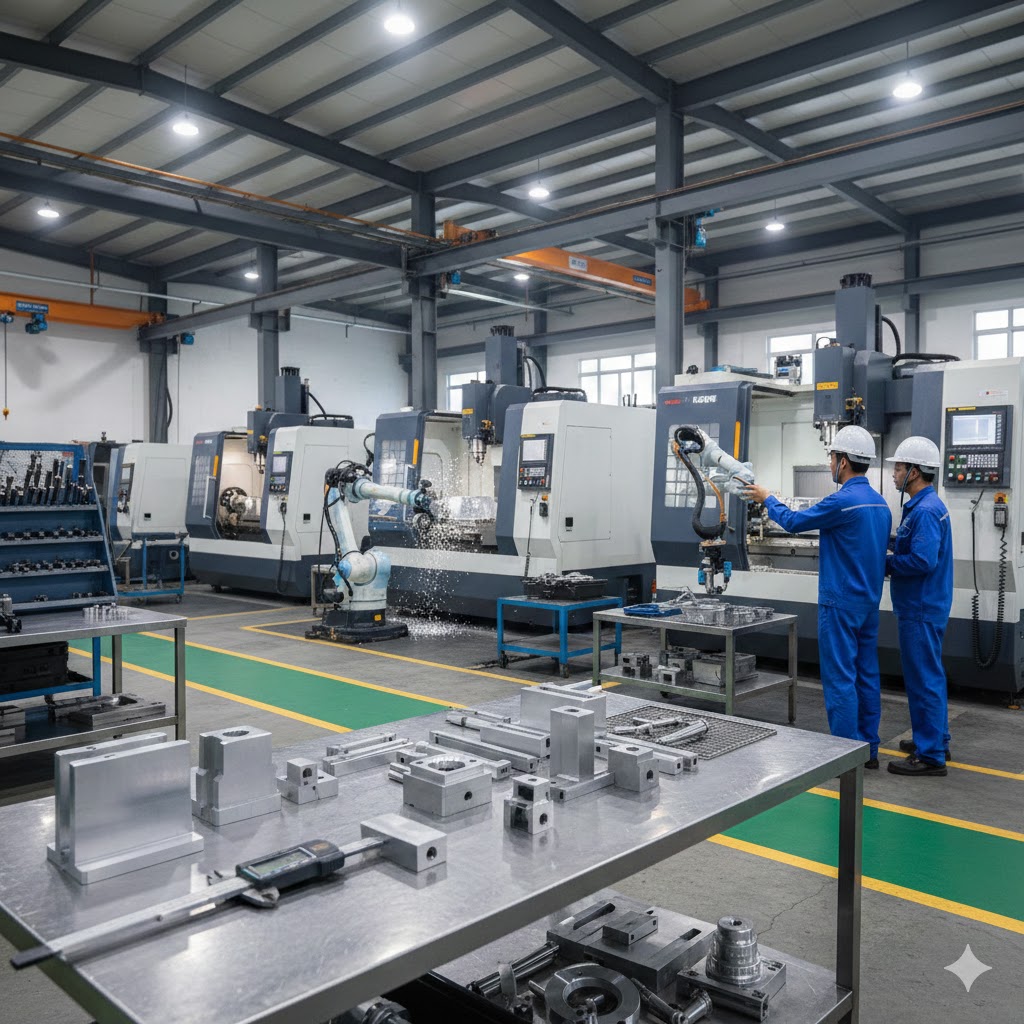
CNC Machining Cost in Vietnam has become a central topic for global OEMs and industrial buyers seeking competitive manufacturing solutions in 2026. As supply chains continue to diversify, understanding the real pricing drivers behind CNC Machining Cost is critical for accurate budgeting, supplier evaluation, and long-term sourcing strategy.
Vietnam has positioned itself as a strong alternative to China and other Asian manufacturing hubs. However, cost is not determined by labor alone. Instead, CNC Machining Cost depends on a combination of machining complexity, hourly rates, labor efficiency, material pricing, overhead structure, and quality requirements. Therefore, buyers must evaluate the full cost structure rather than focusing on unit price alone.
CNC Machining Cost Structure in Vietnam 2026
To fully understand CNC Machining Cost, it is important to break down the main cost components. In most Vietnamese precision machining facilities, pricing typically includes:
Material cost
Machine time cost
Labor cost
Tooling and consumables
Quality control and inspection
Overhead and margin
Each of these elements plays a distinct role in determining final pricing.
Material cost fluctuates based on global metal markets. Aluminum, stainless steel, brass, and alloy steel prices directly impact part cost. Meanwhile, machine time is calculated based on machining complexity and cycle duration. The longer the cycle time, the higher the machining portion of the CNC Machining Cost.
Labor contributes to both direct and indirect expenses. However, Vietnam’s competitive workforce structure makes it attractive compared to Western markets.
Finally, inspection standards such as ISO 9001, IATF 16949, or aerospace certifications may increase quality-related overhead but significantly reduce defect risk.
Key Pricing Drivers Affecting CNC Machining Cost
Several major variables influence CNC Machining Cost in 2026. Understanding these drivers allows buyers to optimize design and sourcing strategies.
Part Complexity and Tolerance Requirements
Complex geometries require multi-axis machining centers and longer setup times. Tight tolerances increase inspection time and may require slower feed rates. Consequently, advanced components naturally raise CNC Machining Cost.
Design for manufacturability can reduce unnecessary features and minimize machine time. Therefore, early engineering collaboration with suppliers often lowers total cost.
Production Volume
Low-volume prototype runs typically have higher per-unit CNC Machining Cost because setup and programming time are amortized across fewer pieces. In contrast, higher production volumes benefit from economies of scale and process optimization.
Vietnamese manufacturers increasingly invest in automation and pallet systems to improve batch efficiency. As a result, medium-to-high volume production is particularly competitive in Vietnam.
Machine Type and Capability
Three-axis machining remains the most affordable option. However, 4-axis and 5-axis CNC machining offer faster cycle times for complex parts. Although multi-axis equipment has higher hourly rates, it may reduce total machining time. Consequently, total CNC Machining Cost sometimes decreases despite higher equipment capability.
Machining Hourly Rate in Vietnam
Machining hourly rate is a critical metric for buyers evaluating CNC Machining Cost. In 2026, typical machining hourly rate ranges in Vietnam are:
Three-axis CNC milling: competitive entry-level pricing
Four-axis CNC milling: moderate increase depending on precision
Five-axis CNC machining: premium rate but faster processing
CNC turning centers: generally lower than milling for rotational parts
Compared to North America and Europe, Vietnam’s machining hourly rate remains significantly lower. Even compared to China, Vietnam maintains competitive advantages in certain industrial zones due to controlled overhead and lower operating costs.
However, hourly rate alone does not reflect efficiency. A higher hourly rate machine may complete a part in less time. Therefore, buyers should always calculate total machining time rather than relying solely on the base machining hourly rate.
For internal reference, detailed benchmarking can be found in the Vietnam Comparison Guide, which evaluates Vietnam against other global machining hubs in terms of cost structure and performance.
Vietnam Labor Cost and Its Impact
Vietnam labor cost remains one of the main advantages for international buyers. In 2026, average skilled CNC operator wages in Vietnam are substantially lower than in Western markets while maintaining strong technical capability.
Nevertheless, Vietnam labor cost is gradually increasing due to industrial growth and foreign direct investment. Although wages are rising annually, productivity improvements and technical training have helped maintain competitive CNC Machining Cost.
Moreover, Vietnam’s demographic structure provides a stable and relatively young workforce. Technical colleges and vocational training programs continue to supply CNC technicians, machinists, and quality engineers. Consequently, labor-related cost increases are balanced by improved operational efficiency.
It is also important to note that labor represents only a portion of CNC Machining Cost. Machine depreciation, tooling wear, quality control, and facility overhead frequently account for a larger share in high-precision industries.
Vietnam vs Global Machining Cost Position
Vietnam’s CNC Machining Cost advantage becomes clearer when compared to global markets.
In the United States and Europe, labor and compliance costs significantly increase machining expenses. Energy prices and insurance costs further raise overhead.
China remains a major competitor. However, rising wages, environmental compliance enforcement, and geopolitical trade pressures have narrowed the gap. Therefore, Vietnam is increasingly seen as a strategic alternative in Asia.
Buyers looking for detailed regional benchmarking should consult the Vietnam Comparison Guide for a structured cost comparison model covering China, India, Eastern Europe, and Mexico.
Additional Cost Factors in 2026
Beyond basic machine and labor cost, several additional variables influence CNC Machining Cost in Vietnam.
Tooling and Consumables
High-hardness materials require premium tooling. Tool wear increases cost per part. Furthermore, complex parts may require custom fixtures or jigs, which add upfront investment.
Quality Assurance
Advanced industries such as automotive, aerospace, and medical require strict inspection protocols. Coordinate measuring machines, material traceability systems, and documented quality processes increase operational cost but ensure compliance.
Logistics and Export Handling
While Vietnam offers competitive manufacturing pricing, international freight, packaging standards, and export documentation must also be factored into total landed cost.
Fortunately, Vietnam benefits from strong port infrastructure and multiple free trade agreements, which reduce tariff burdens in key export markets.
How to Reduce CNC Machining Cost
Industrial buyers can proactively reduce Cost through strategic planning.
First, optimize part design for manufacturability. Removing unnecessary tight tolerances reduces machining time.
Second, consolidate part families to increase production volume. Larger batch sizes reduce per-unit cost.
Third, select the appropriate machining process. For example, combining casting with finish machining may lower total cost compared to full billet machining.
Fourth, collaborate early with suppliers to improve production workflow. Engineering feedback often reveals cost-saving opportunities.
Future Outlook for CNC Machining Cost in Vietnam
Looking ahead to 2026 and beyond, CNC Machining Cost in Vietnam is expected to remain competitive despite gradual wage increases. Automation adoption, digital manufacturing systems, and lean production practices are improving productivity across the sector.
Moreover, foreign investment continues to expand Vietnam’s industrial capacity. High-precision industries such as electronics, automotive components, renewable energy systems, and industrial machinery are driving further CNC capability upgrades.
As Vietnam strengthens its position in global supply chains, CNC Machining Cost will increasingly reflect not only price competitiveness but also reliability, scalability, and technical performance.
Conclusion
CNC Machining Cost in Vietnam is shaped by multiple interconnected factors including hourly rate, Vietnam labor cost, material pricing, complexity, and production volume. While labor remains an advantage, machine efficiency and process optimization play equally important roles.
For decision-stage buyers in 2026, evaluating CNC Machining Cost requires a holistic approach rather than a simple price comparison. Vietnam offers a balanced combination of cost efficiency, technical capability, and supply chain resilience.
Companies seeking long-term sourcing stability should analyze machining cost drivers carefully, benchmark against global competitors, and engage suppliers early in the design process. By doing so, they can unlock sustainable cost advantages while maintaining high manufacturing standards.