AI CNC Inspection has become a cornerstone of advanced manufacturing in Vietnam’s precision machining sector. As global OEMs demand zero defect quality and real-time traceability, AI CNC Inspection systems enable manufacturers to detect micro-level deviations before they impact production performance. This case study demonstrates how artificial intelligence, automated QC systems, and machine vision CNC technology transformed quality assurance processes inside a modern Vietnamese machining facility.
Vietnam’s manufacturing ecosystem is undergoing rapid digital transformation. Buyers no longer evaluate suppliers solely on cost efficiency. Instead, they prioritize reliability, transparency, and defect prevention capability. Consequently, AI CNC Inspection has emerged as a strategic differentiator for export-driven factories targeting aerospace, automotive, electronics, and high-precision industrial sectors.
AI CNC Inspection Architecture and System Integration
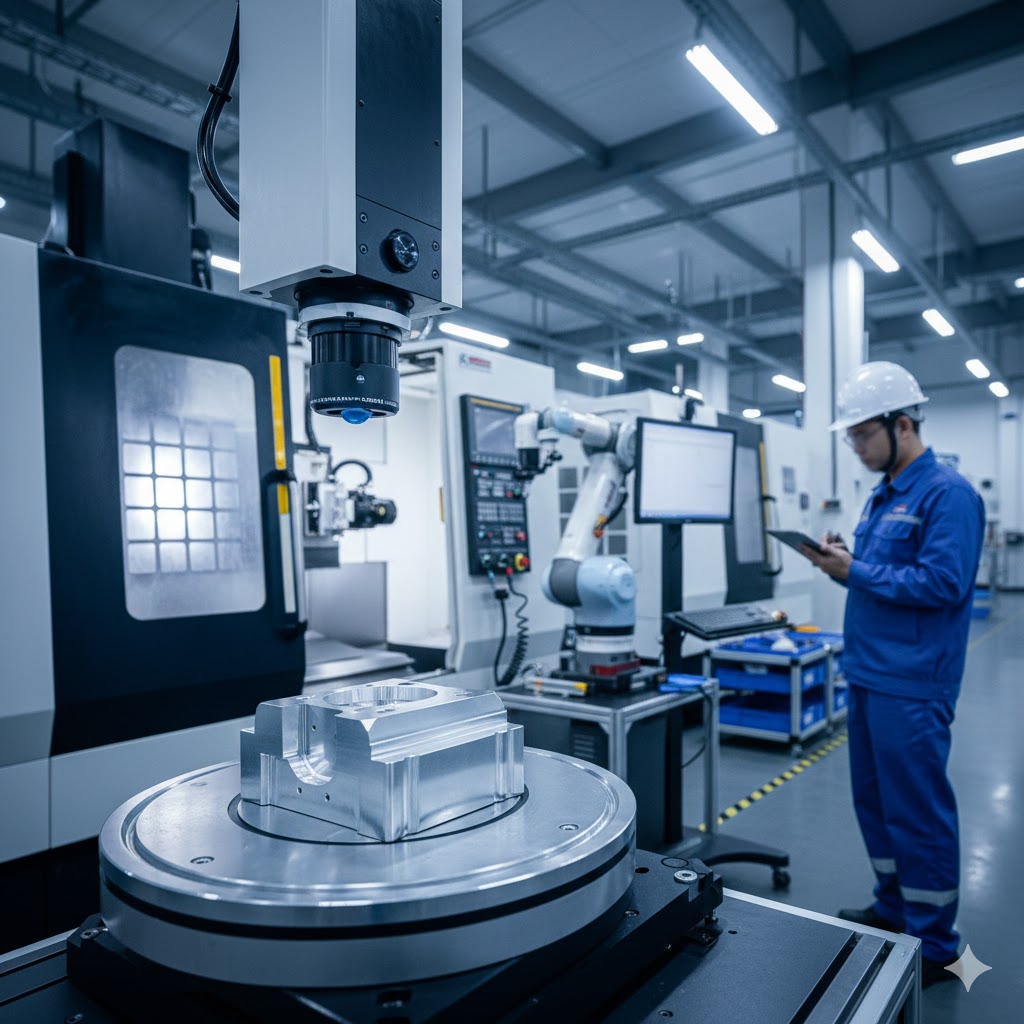
AI CNC Inspection integrates intelligent software algorithms with high-resolution imaging systems and CNC machine data streams. Rather than relying on post-production inspection alone, the system continuously analyzes part geometry during and immediately after machining.
In this case study, the facility implemented:
- Inline probing systems inside CNC machines
- High-resolution camera arrays for surface analysis
- Machine learning software for defect classification
- Real-time inspection dashboards linked to MES
As a result, inspection time decreased significantly while detection accuracy improved. Moreover, the system reduced reliance on manual visual inspection, which historically introduced inconsistency.
Real-Time Monitoring and Data Analytics
AI-driven inspection systems collect dimensional and surface finish data continuously. Instead of storing information offline, production analytics update in real time.
The system tracks:
- Dimensional tolerances
- Surface roughness
- Edge integrity
- Tool wear indicators
Because inspection integrates directly with CNC programs, deviation alerts trigger immediate corrective action. Consequently, the factory minimized the risk of producing defective batches.
Automated QC Implementation and Process Optimization
Automated QC formed the foundation of the AI CNC Inspection upgrade. Before modernization, quality control required manual measurement sampling. While effective, this method slowed production and increased labor costs.
After integrating automated QC:
- 100 percent of parts received digital inspection validation
- Inspection cycle time decreased by 30 percent
- Human error in reporting declined
- Traceability records became fully digital
The automated QC system also generated predictive insights. When tolerance drift appeared across several cycles, the system recommended tool recalibration before defects escalated.
Reduction of Scrap and Rework
Defect detection at the earliest machining stage significantly reduced scrap rates. Previously, dimensional errors sometimes went unnoticed until final inspection. Now, AI CNC Inspection identifies micro-level deviations instantly.
Within six months of deployment:
- Scrap rate decreased by 17 percent
- Rework hours declined by 22 percent
- Customer rejection incidents dropped to near zero
Because production remained stable, delivery performance improved as well.
Machine Vision CNC and Surface Defect Detection
Machine vision CNC technology strengthened surface inspection capability. High-speed industrial cameras scanned parts for micro-cracks, burrs, and surface inconsistencies.
Unlike manual inspection, machine vision systems maintain constant accuracy regardless of shift length or operator fatigue. The system applies trained neural network models to classify defects and recommend corrective measures.
Furthermore, machine vision CNC integration allowed automatic rejection of non-conforming parts before packaging. This proactive filtering protected downstream processes and reinforced quality credibility.
Integration with Industry 4.0 Vietnam Strategy
AI CNC Inspection aligns with broader Industry 4.0 Vietnam transformation goals. Smart factories require connected data streams across machining, inspection, and logistics systems.
For a broader understanding of digital transformation initiatives, explore Industry 4.0 Vietnam to see how smart manufacturing strategies integrate automation, robotics, and analytics across the country’s machining sector.
Scalability and Multi-Line Deployment
After initial success, the facility expanded AI CNC Inspection to additional machining lines. Scalability proved efficient because software architecture allowed seamless integration across machines.
Key scalability advantages included:
- Centralized inspection dashboards
- Unified defect database
- Cross-line performance benchmarking
- Automated report generation for clients
Consequently, management gained full visibility across production cells without increasing supervisory headcount.
Cybersecurity and Data Integrity Considerations
As inspection systems became digitally connected, cybersecurity safeguards became essential. The facility implemented encrypted data transmission and restricted access protocols.
By securing inspection databases and CNC program files, the manufacturer protected intellectual property and maintained compliance with international data security standards.
Workforce Transformation and Skill Evolution
AI CNC Inspection does not eliminate skilled quality engineers. Instead, it elevates their role from manual measurement toward data interpretation and continuous improvement.
Engineers received training in:
- AI model calibration
- Statistical process control analysis
- Inspection algorithm validation
- Predictive maintenance evaluation
As a result, workforce capability strengthened alongside digital infrastructure. Employees became proactive problem-solvers rather than reactive inspectors.
Measurable Business Impact
The transition to AI CNC Inspection produced measurable financial and operational results:
- Improved customer audit scores
- Reduced warranty claims
- Faster quality documentation approval
- Enhanced competitiveness in export markets
Moreover, transparent inspection reporting improved trust with international OEM clients. Buyers gained confidence knowing every component underwent intelligent verification.
Strategic Importance for Decision-Stage Buyers
At the decision stage, buyers evaluate long-term reliability. AI CNC Inspection provides assurance that quality control extends beyond manual oversight.
Key evaluation factors include:
- Integration depth with CNC systems
- Real-time data accessibility
- Predictive defect analytics capability
- Digital traceability compliance
Vietnamese manufacturers implementing advanced AI inspection systems position themselves as forward-looking partners prepared for high-precision industrial demands.
Future Outlook of AI CNC Inspection in Vietnam
Looking ahead, AI CNC Inspection systems will integrate deeper machine learning capabilities. Adaptive algorithms will automatically refine tolerance thresholds based on historical production data.
Additionally, cloud-based analytics may enable cross-factory benchmarking, enhancing collaborative improvement across manufacturing networks.
As Vietnam continues digital industrialization, AI-driven quality assurance will become standard practice rather than an optional upgrade.
Conclusion
AI CNC Inspection in Vietnam demonstrates how automated QC and machine vision CNC technology deliver zero defect quality in precision manufacturing environments. Through intelligent data integration, early defect detection, and scalable deployment, the facility achieved measurable improvements in performance and customer confidence.
For global buyers seeking reliable machining partners at the decision stage, AI CNC Inspection capability signals operational maturity and digital readiness. Vietnam’s continued investment in smart quality systems strengthens its role as a competitive and technologically advanced manufacturing hub.
If your organization requires precision components supported by intelligent inspection infrastructure, now is the time to evaluate AI CNC Inspection solutions in Vietnam and secure consistent zero-defect production performance.