Vietnam Industrial Components manufacturing has expanded significantly as global industries seek diversified, precision-driven supply chains. While transportation sectors attract major attention, specialized industrial component production represents an equally important pillar within Vietnam’s machining ecosystem. Today, Vietnam Industrial Components support construction machinery, defense systems, medical devices, automation equipment, and heavy industrial assemblies.
Operating within the broader framework of Vietnam Industry Applications, this industry hub page outlines CNC capability, sector specialization, compliance systems, and export readiness across non-transportation industrial segments.
As international buyers move toward risk-balanced sourcing strategies, Vietnam Industrial Components provide a scalable, technically capable solution for mid-to-high complexity industrial programs.
Vietnam Industrial Components in Specialized CNC Manufacturing
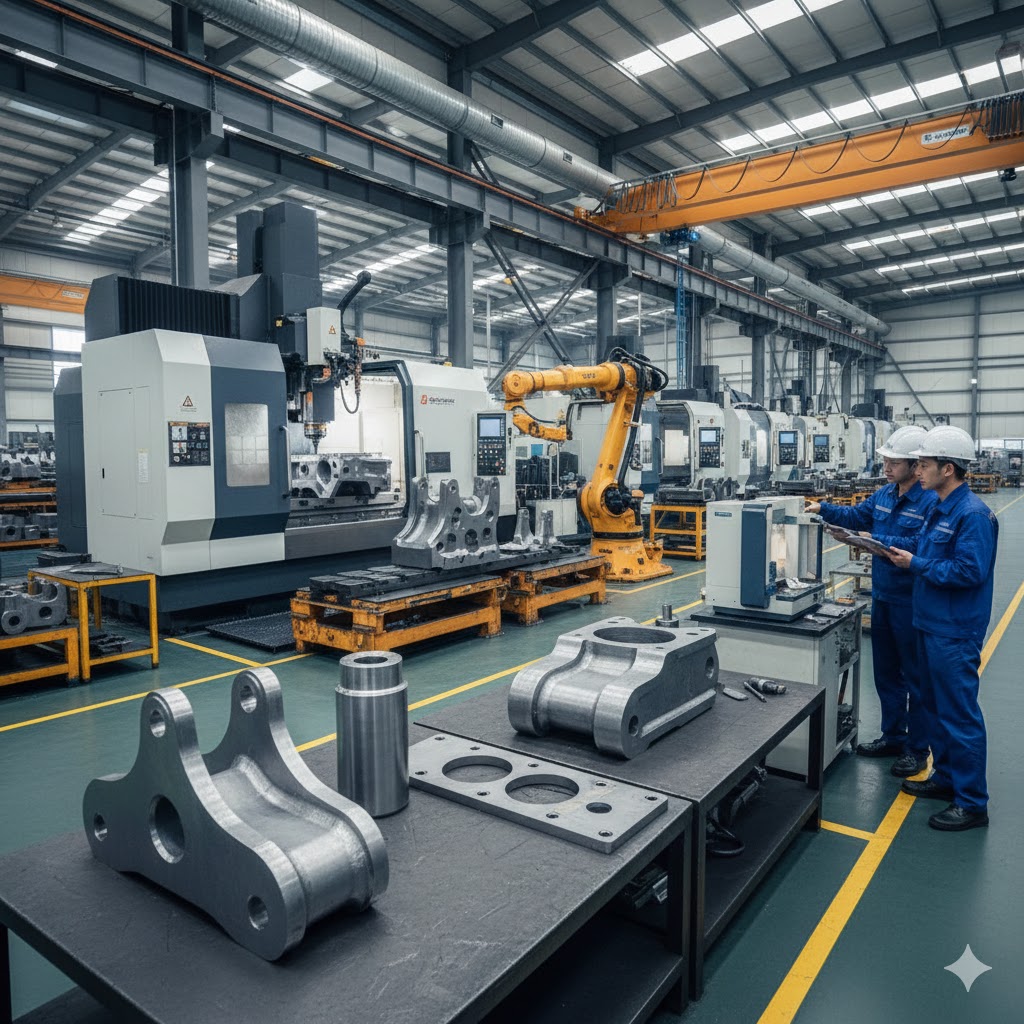
Vietnam Industrial Components are produced through advanced CNC machining, robotic welding, laser cutting, and integrated fabrication systems. Modern facilities operate multi-axis machining centers capable of processing aluminum, alloy steel, stainless steel, and ductile iron.
Because industrial applications vary widely in size and complexity, suppliers maintain flexible production cells that accommodate both medium-volume and custom-engineered projects. In addition, digital monitoring systems track machining parameters to maintain consistency across production runs.
Moreover, integrated industrial clusters allow machining, heat treatment, coating, and final assembly to occur within coordinated zones. This reduces lead time variability and improves supply chain transparency.
Construction and Heavy Equipment Applications
Industrial manufacturing often intersects with heavy machinery and infrastructure development. Therefore, CNC machining for construction equipment represents a significant growth segment.
Construction Machining
The development of Construction Machining in Vietnam focuses on structural brackets, hydraulic components, chassis supports, and wear-resistant parts. These components must withstand high mechanical stress and demanding operating environments.
Because construction machinery operates under load-intensive conditions, dimensional accuracy and material strength are critical. CNC machining centers apply optimized feed rates and durable tooling strategies to ensure performance reliability.
Additionally, inspection infrastructure verifies structural tolerances before shipment. Coordinate Measuring Machines and hardness testers confirm conformance to design specifications.
Vietnam’s competitive labor structure, combined with improving engineering depth, supports construction-related industrial component production at export-grade standards.
Defense and High-Specification Machining
Defense-related production requires strict confidentiality, precision, and structured quality control. Although Vietnam does not publicly position itself as a major defense manufacturing hub, specialized machining services continue to expand.
Defense Machining
The capability for Defense Machining includes high-tolerance aluminum housings, precision steel components, and structurally reinforced assemblies. Because defense systems demand reliability under extreme conditions, machining parameters must be tightly controlled.
Suppliers working in this segment implement rigorous documentation practices and controlled process environments. Material traceability and inspection reporting enhance reliability.
Moreover, secure production zones and restricted data management systems protect intellectual property during defense-related projects.
Defense machining programs often involve smaller production batches; however, quality and compliance remain paramount.
Medical and Precision Industrial Systems
Vietnam Industrial Components manufacturing also extends into medical device production and precision instrumentation.
Medical Device Machining
The growth of Medical Device Machining aligns with ISO 13485 quality frameworks. CNC machining for surgical tools, diagnostic device housings, and implantable component supports requires micron-level precision.
Sterile production environments and traceability systems are integrated into workflow management. Furthermore, strict validation procedures ensure compliance with international medical standards.
Although medical device machining differs from heavy industrial applications, the shared CNC infrastructure strengthens overall capability across sectors.
Construction CNC Infrastructure and Scalability
Construction CNC operations within Vietnam Industrial Components facilities emphasize scalability and durability. Heavy-duty machining centers process large castings and structural frames used in excavators, cranes, and lifting systems.
Automated pallet systems reduce downtime between machining cycles. Meanwhile, real-time performance dashboards track spindle load and vibration patterns.
This structured production approach ensures stable output levels even during demanding project timelines.
Process Engineering and Material Expertise
Industrial component production frequently involves diverse material types, including high-strength steel alloys, aluminum castings, and specialized composites.
Process engineers adjust machining parameters based on material hardness, thermal behavior, and surface finish requirements. Consequently, optimized tooling strategies reduce wear and maintain tolerance accuracy.
Furthermore, coolant management systems prevent heat distortion during extended machining cycles. This technical precision strengthens component durability and reliability.
Inspection and Quality Assurance Systems
Reliable industrial manufacturing requires structured quality assurance frameworks. Leading Vietnam Industrial Components facilities implement:
ISO 9001 quality management systems
Digital traceability platforms
Coordinate Measuring Machines
Surface roughness testing
Hardness and tensile strength verification
Inspection data is archived electronically, supporting export documentation and audit readiness.
Although capability levels differ among suppliers, top-tier facilities deliver performance aligned with international industrial standards.
Integration with Vietnam Industry Applications
Vietnam Industrial Components operate within the broader ecosystem of Vietnam Industry Applications, which encompasses transportation machining, aerospace, EV, and smart factory systems.
Cross-sector integration allows capacity balancing and shared technical infrastructure. For example, multi-axis CNC machines used in transportation manufacturing can also support industrial component production when aligned with compliance requirements.
This synergy enhances overall industrial resilience and efficiency.
Export Infrastructure and Supply Chain Positioning
Industrial clusters located near major ports improve logistics efficiency. Suppliers experienced in international trade documentation streamline shipping and customs processes.
In addition, Vietnam participates in multiple free trade agreements, enhancing export competitiveness.
However, buyers should conduct supplier audits to verify engineering capability, certification status, and production scalability.
Cost Competitiveness and Risk Diversification
Vietnam Industrial Components manufacturing offers competitive labor rates relative to Western markets. However, cost advantage alone does not define supplier selection.
The primary value lies in balanced cost-to-capability performance, flexible production volumes, and reduced geopolitical concentration risk.
As multinational manufacturers diversify sourcing beyond single-country models, Vietnam strengthens its position as a stable alternative for specialized industrial component production.
ESG and Sustainability Considerations
Environmental compliance increasingly influences industrial procurement decisions. Suppliers invest in wastewater treatment systems, energy-efficient machinery, and waste reduction programs.
Alignment with ESG standards enhances eligibility for international industrial contracts.
Engineering Collaboration and Continuous Improvement
Industrial component programs often require customization and iterative design adjustments. Vietnamese machining providers collaborate with clients to improve manufacturability and reduce cost without sacrificing structural integrity.
Continuous improvement initiatives optimize cycle time and enhance production efficiency over the life of the program.
Conclusion
Vietnam Industrial Components manufacturing represents a critical segment within the country’s evolving machining ecosystem. From construction machining and defense machining to medical device machining and heavy industrial production, Vietnam supports a wide range of specialized applications.
Integrated within Vietnam Industry Applications, this industrial hub offers scalable CNC infrastructure, improving quality systems, and export-ready supply chain capability.
For international buyers seeking diversified, precision-focused industrial component manufacturing, Vietnam Industrial Components provide a commercially competitive and technically reliable solution aligned with modern global sourcing strategies.